Italy for Seniors — Can You Still See the Great Sites?
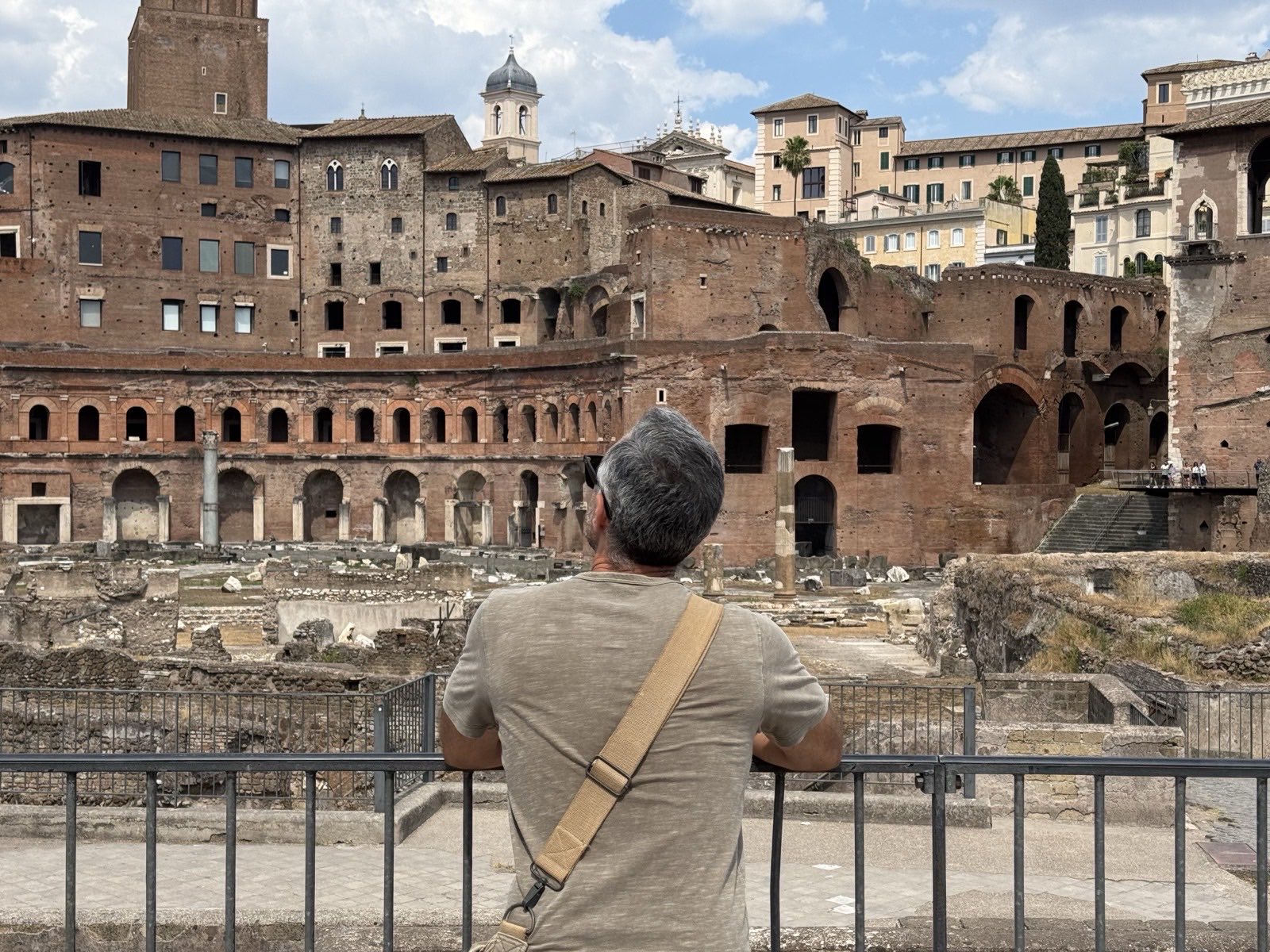
The question we are asked more than almost any other — by older travellers, and just as often by the adult children quietly arranging a trip for their parents — is a very concrete one. Can you still actually visit the great archaeological sites of Italy: the Forum, the Colosseum, Pompeii? Or have they, with their steps and their worn stone and their crowds, become things you admire from the outside and never quite reach? It is a fair question, and a serious one, and it deserves a real answer rather than a brochure’s easy reassurance. What follows is that answer, as complete and as straight as we can make it. But it has to open with a premise, because without the premise everything else would mislead you.
Like almost everything in Italy — and this is a bitter truth, though in its own way it is also the whole beauty of the place — you cannot make a single statement that holds true from the Alps to Sicily. Italy is not a country in the tidy sense of the word; it is a mosaic, a thousand years of small worlds that never fully merged, fragmented into countless traditions and dialects and ways of building. And that fragmentation is not an abstraction. It is physical. It shows up in towns and landscapes that can feel like different planets an hour’s drive apart — a flat Renaissance grid in one place, a medieval hill town stacked vertically against a slope in the next, a whole city built on water after that. Accessibility, then, is never one thing here. It is a hundred different things at once. And so, if what you want is certainty — the real, practical certainty of knowing that tomorrow’s visit will actually work for you — there is only one dependable way to have it: someone has to know, precisely, where you are going. Not whether “Italy” is accessible, which is a meaningless question, but whether this site, in this town, on this particular morning, is. Gathering that knowledge is half the work of a good trip. It happens to be the half we take off your hands entirely.
The famous sites look after you better than you fear
Begin with the museums and the great public sites, because that is where most of the worry lives. On paper, access is guaranteed — Italian law requires it, and the websites duly list the ramps and the lifts and the adapted restrooms. Reality is occasionally less tidy: you arrive to find the wheelchair platform out of service that week, or a “temporary” diversion that has been temporary for a year, or some other small surprise of the same unglamorous family. The rule here is the old and sensible one, trust but check; and the checking, done quietly and in advance so that you never once feel it, is exactly the job.
That said, the reassurance is genuine, and it deserves to be stated plainly, because far too many people talk themselves out of a journey they could easily have made. At the principal sites — the famous ones, the ones you have actually crossed an ocean to see — a great deal of thought has gone into access these last years, and the staff, in our experience, are attentive and kind to anyone who needs a hand. The means are there. The Colosseum reaches two of its levels entirely step-free, by ramp and by lift; it lends wheelchairs at the entrance at no charge; and as of 2026 a new glass elevator carries visitors up to the higher tiers, to views that for years were closed to anyone who could not climb. The Vatican Museums admit a traveller with a disability — and, just as importantly, a companion — free of charge, wave the two of them past those famous, punishing queues, lend a wheelchair for the day, and bring you to the Sistine Chapel itself by a dedicated lift. And even Pompeii — Pompeii, of all places, a vast field of two-thousand-year-old ruins — has laid a barrier-free route more than three kilometres long, with ramps and a lift and shaded places to rest, that carries you past the Forum, the House of the Faun and the great Amphitheatre.
Where real difficulty remains, it is almost never bureaucratic and almost always physical — the site itself. The ancient roads, the original paving, the stone cupped and rutted and worn uneven by twenty centuries of feet. For a traveller with serious difficulty walking, that is not a myth; it is real, and we will never pretend otherwise to you. And yet even there, the accessible corridors that have been opened give a genuinely good visit — perhaps not every last corner of the ruins, but the heart of the place, and far more than enough to feel it. And for the far larger number of travellers who are not disabled at all, but simply older, simply in less of a hurry, simply wanting to move at a gentler pace — for them, almost everything is comfortably within reach. Steps, slopes, uneven ground and all. You take your own time. And in those four words, your own time, lies the entire matter — because there is really only one thing in all of Italy with the power to take that time away from you.
The rush is the real obstacle, not age
Here a warning, and it comes from my own experience rather than from any guidebook. Be very wary of the cheap guided visits sold in bulk on the big aggregator platforms — the ones that gather thirty strangers under a numbered paddle and move them through a site as a single impatient body. I do not recommend them, and I say so having been one of those thirty myself, once, in the Roman Forum, with a small daughter and a pushchair in tow. It was not a good afternoon. There was a great deal of walking, and it was fast — very fast — the pace set by the guide’s schedule rather than by anything you might actually have wanted to stop and look at. There was an earpiece that kept slipping out of my ear, so that the history itself arrived in broken fragments over the noise of the crowd. There was a pushchair to be dragged and bounced across the Forum’s broken stones while I half-ran to keep the group in sight. I struggled — and I am not seventy, and I was not leaning on a cane. And every bit of that is before we even come to how much of the Forum was quietly skipped altogether, simply to keep everyone on schedule, which is a different complaint for a different day.
The point I want to leave you with is this one. Visited properly — at the right pace, which is only to say the human pace, the pace it always ought to have been — almost nothing in Italy is closed to a traveller who is older, or who walks more slowly, or who needs to sit for ten quiet minutes in the shade before going on.
What shuts the doors is never the age of the person standing at them. It is the hurry of the tour.
The old centres, and the cure for them
One last thing, said as plainly as I know how. Italy’s historic centres are enchanting and awkward in exactly equal measure. They carry centuries — millennia — of unbroken history, and their streets were laid down long before anyone gave a thought to wheels, or comfort, or the knees of a visitor come from far away. They have improved enormously in the space of a few decades. And yet some of them remain, by their very nature, a tiring up-and-down; and some of the loveliest towns of all sit high on their hills for the plain old reason that, once, that was where they were easiest to defend. This is not a flaw to be apologised for. It is, if you allow it to be, the very beauty of the thing.
Because a place like that asks only three small things of you: a little patience, a little time, and — above all the rest — a little curiosity. And curiosity, it turns out, is the cure for nearly every one of the small difficulties. Because the instant you begin to look about you with a curious eye — at the iron door-knocker, the worn saint in his wall niche, the way the evening light pours down a stepped alley — slowing down stops being an effort and quietly becomes the entire point of your being there at all. What we try to do, in Grand Tour, is turn the ordinary walk between one famous thing and the next into a discovery in its own right: a few unhurried steps through what is, when you stop to consider it, an open-air museum. And in a museum, as everyone knows, one does not run.
And here is the quiet reward the marched-through crowd never collects. Go slowly — but go prepared, which almost no one does — and you stop merely seeing the Forum or the Pantheon and begin to recognise them: to know what each stone was for, to read a worn inscription, to understand the place you are standing in rather than photograph it and move on. The trouble with being told it all on the spot, by a guide at your ear, is that you cannot truly do two things at once — you cannot absorb the explanation and stand there and admire. And admiring, deeply, is the whole point of the visit; when someone is talking beside you, half the magic quietly slips away. Make no mistake: it is still wonderful. It could simply be so much more. That is why the understanding has to come before you arrive — so that on the day, you are free only to look. That preparation is the whole of what we call Knowledge Travel.
So — can you still see Italy? You can. Not as a race against a clock, and not as some diminished, roped-off version of the real thing handed to you on account of your age, but as a private journey shaped around you, in which the question “will it work for me?” is never once left to chance — because someone who knows the ground has already gone ahead, and looked, and checked the lift, and chosen the right entrance, and built the whole of the day around what you will genuinely, unhurriedly enjoy. The famous fears, when at last you walk up to them, turn out to be very largely myth. And what little is left of them — the worn stone underfoot, the hill at the end of the lane, the slower step — stops being an obstacle at all, and becomes, with a little curiosity, simply Italy.
Italy without the rush and without the worry — paced to you, checked in advance, with the difficult parts quietly taken care of before you arrive.
Request a free consultation →